
In France, the publication of marriage banns remains a mandatory formality before any civil wedding ceremony. The banns publicly announce the planned marriage and must be posted at the town hall where the wedding will take place, as well as in the municipality where each future spouse lives. This requirement allows anyone to report a possible legal impediment, such as an existing marriage.
The regulatory framework has not fundamentally changed in recent years. Physical posting at the town hall remains the rule, and online access, often discussed, is neither widespread nor centralized nationwide.
Marriage banns and online portals: what town halls actually offer
Several websites and forums suggest that marriage banns can be viewed online in just a few clicks. The reality is more nuanced. In Paris, the City’s administrative publications portal hosts municipal orders and decisions. This portal is not a register of marriage banns. Confusing the two leads to fruitless searches.
Some medium-sized municipalities have indeed added a dedicated section for banns to their official websites. These initiatives remain local and depend on each municipality’s discretion. There is no national platform that brings together all current banns.
To find out whether a particular town hall publishes its banns online, the most reliable approach is to check the municipality’s website directly or contact its civil registry office. Before searching for marriage banns in Paris’s 19th arrondissement, France, it is best to check what the arrondissement town hall makes available.

Viewing marriage banns at the town hall of Paris’s 19th arrondissement
For a wedding taking place in the 19th arrondissement, the starting point is the arrondissement town hall itself. This is where the marriage application is filed and the civil registrar orders the publication of the banns.
Physical posting at the town hall
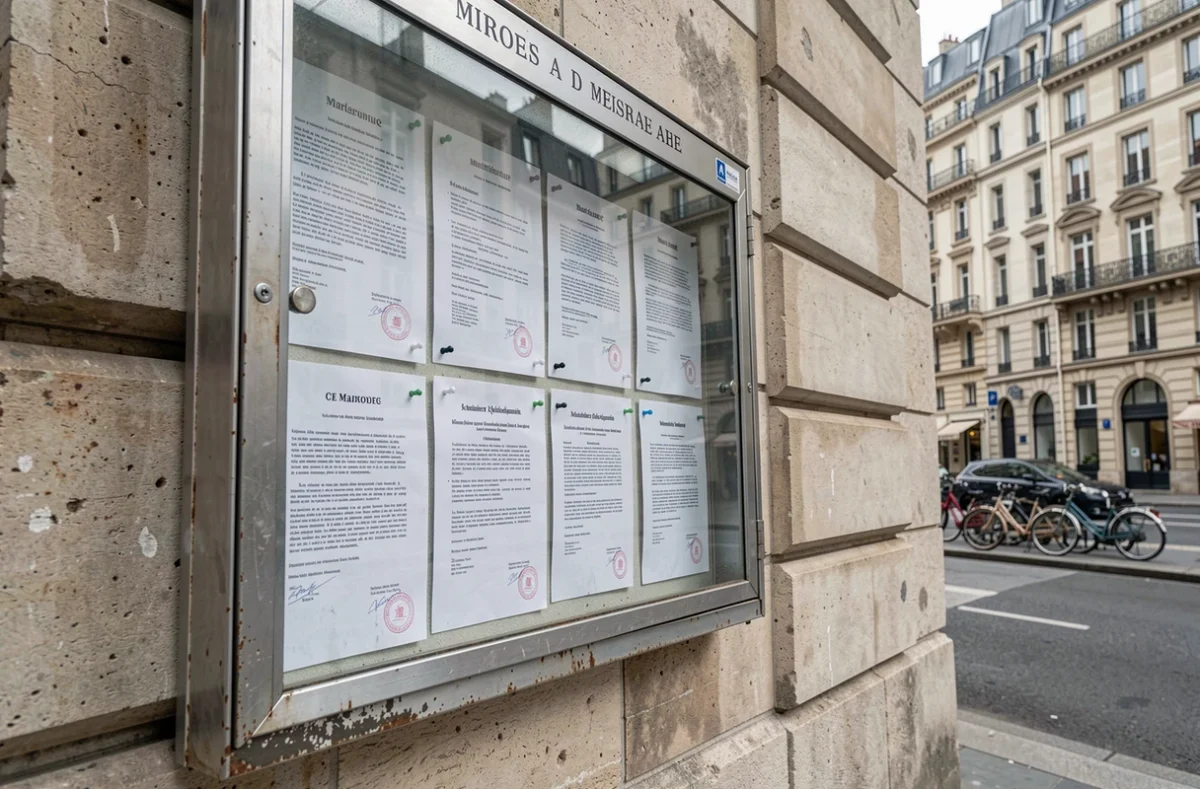
The banns are posted on a notice board accessible to the public, usually near the entrance or in the town hall lobby. They remain posted for ten calendar days from the date of publication. During this period, anyone can visit in person to view the notices.
The posted information includes the future spouses’ surnames, first names, occupations, addresses and places of birth, as well as the planned wedding date. If the future spouses live in different municipalities, the banns must also be published in each municipality where they reside.
Contacting the civil registry office directly
According to the sources consulted, the 19th arrondissement town hall does not have a dedicated webpage for viewing current banns. Calling the civil registry office is still the surest way to get information about a specific notice. The office can confirm whether a particular couple’s banns have been published and on what date.
The difference between current banns and marriage publication archives
Current banns are often confused with archival searches. These two processes serve different purposes and are carried out in different places.
- Current banns relate to upcoming weddings. They can be viewed at the town hall while they are posted, after which they are taken down.
- Marriage publication archives are historical documents. In Paris, older registers are held at the Archives de Paris. The Coutot collection, for example, brings together extracts of banns from the Seine department covering the period from 1860 to 1902, accessible through genealogy platforms.
- Civil status records (marriage and birth certificates) are separate from banns. A marriage certificate confirms that a marriage took place, whereas banns only attest to the intention to marry.
Publication of the banns does not guarantee that the wedding took place. In some cases, the marriage is cancelled or postponed after publication. This distinction matters both for genealogical research and for administrative checks.
Practical limitations of viewing marriage banns in France
The lack of a centralized database creates a practical problem for anyone trying to check banns without knowing which municipality is involved. If the future spouses live in two different towns, it may be necessary to check three separate notice boards (the town hall where the wedding will take place and the town halls where each spouse lives).
The posting period, limited to around ten days, also narrows the window for viewing the notices. Anyone away during this period may simply miss the announcement. Town halls are under no legal obligation to keep an online archive of expired banns.
Practices vary among municipalities that publish their banns online. Some post a PDF updated every week. Others simply photograph a notice board and add the image to their website. The quality and frequency of these updates depend on each administration’s resources.
What to do when the town hall does not publish banns online
The most direct approach is still to visit the town hall or call the civil registry office. In Paris, each arrondissement manages its own publications. There is no single Paris-wide service for searching banns across all arrondissements.
The future spouses themselves receive confirmation that the banns have been published. If you are directly involved in a wedding, the application filed at the town hall lets you track the process without having to monitor the public notice board.
Marriage banns in France are therefore still published through a process rooted in the local operations of town halls. Each municipality decides how it publishes its banns, so any remote search depends on the digital choices made by the administration concerned. In Paris’s 19th arrondissement, as in most French municipalities, the most effective approach is to contact the civil registry office directly.