
Contemporary art is full of personalities that are as talented as they are unique, each bringing a distinctive touch to this artistic mosaic. Their journeys, often atypical, are both inspiring and captivating.
Take, for example, Yayoi Kusama, known for her immersive polka dot installations, who overcame years of struggle with mental health issues to become a global icon. Similarly, Banksy, the anonymous artist whose provocative street art challenges conventions and questions our society, fascinates with his mystery. Each of these figures has managed to impose their vision, leaving an indelible mark on contemporary art.
The Inspiring Journeys of Contemporary Artists
Contemporary artists assert themselves through their radical approaches and innovative reflections. Among them, Roy Lichtenstein and Andy Warhol, iconic figures of Pop Art, revolutionized the perception of art by integrating elements of popular culture. Their works, often based on comics and consumer products, question the boundary between art and everyday life.
Explorations and Innovations
The journeys of emerging artists also reveal a constant quest for originality. František Kupka, a pioneer of abstraction, transformed painting with works like ‘L’Eau (La baigneuse)’ and ‘Disque de Newton’. His work, imbued with a deep reflection on color and movement, marks a break from classical figuration.
- Roy Lichtenstein: his canvases inspired by comics redefined Pop Art.
- Andy Warhol: his celebrity and consumer product silkscreens have marked the history of modern art.
- Banksy: by using elements of classical paintings, he denounces social and political injustices.
- František Kupka: a pioneer of abstraction, his works are an exploration of color and movement.
Commitments and Provocations
Banksy, with his street art works, engages the public on social and political issues. His creations, often ephemeral and made in unexpected places, challenge conventions and provoke thought. Just like Brian Peppers, Banksy uses anonymity to focus on the message rather than the artist.
Each of these artists, in their own way, contributes to the evolution of contemporary art, bringing new perspectives and constant challenges to our view of the world. Their impact on the history of art is undeniable and continues to inspire future generations.
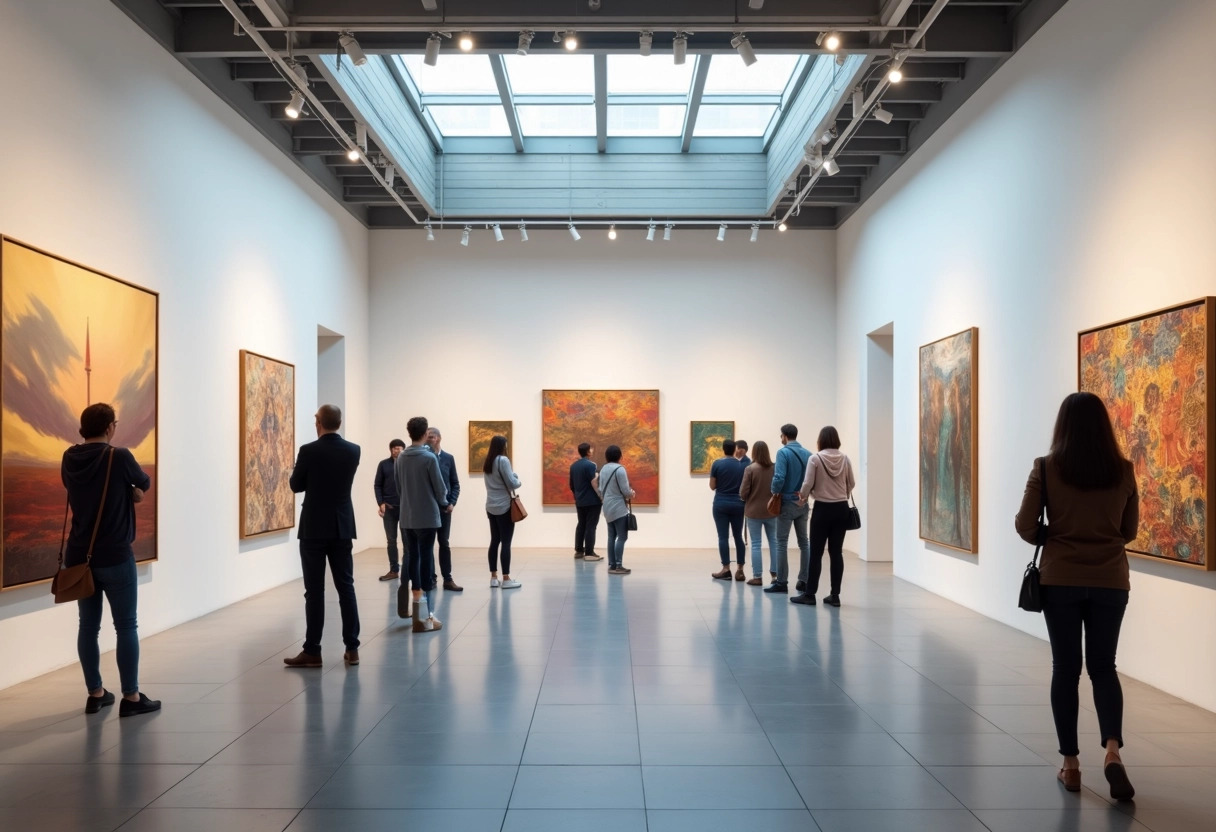
Their Iconic Works and Their Impact on Modern Art
The iconic works of contemporary artists profoundly mark the history of modern art. Roy Lichtenstein and Andy Warhol have each left an indelible mark with iconic creations. Lichtenstein, with his comic-inspired canvases, reinvents painting by using industrial reproduction techniques. Warhol, for his part, immortalizes celebrities and consumer goods, blurring the boundaries between art and commerce.
Some Notable Works
- ‘Guernica’ by Pablo Picasso: a poignant illustration of the horrors of the Spanish Civil War. Displayed at the Reina Sofia Museum in Madrid, this work remains an essential reference.
- ‘The Starry Night’ by Vincent Van Gogh: painted from his room at the asylum in Saint-Rémy-de-Provence, this work is a striking example of expressionism.
- ‘The Mona Lisa’ by Leonardo da Vinci: this portrait famous for its enigmatic smile attracts millions of visitors each year to the Louvre Museum.
- ‘The Scream’ by Edvard Munch: a representation of a figure agonizing under a glowing red sky, emblematic of human anxiety.
The sculptures of František Kupka, a pioneer of abstraction, with works like ‘L’Eau (La baigneuse)’ and ‘Disque de Newton’, redefine the perception of color and movement.
The ability of contemporary artists to engage and provoke, as Banksy does with his street art, demonstrates their lasting impact. By using elements of classical paintings to denounce injustices, Banksy continues to spark debate and reflection.