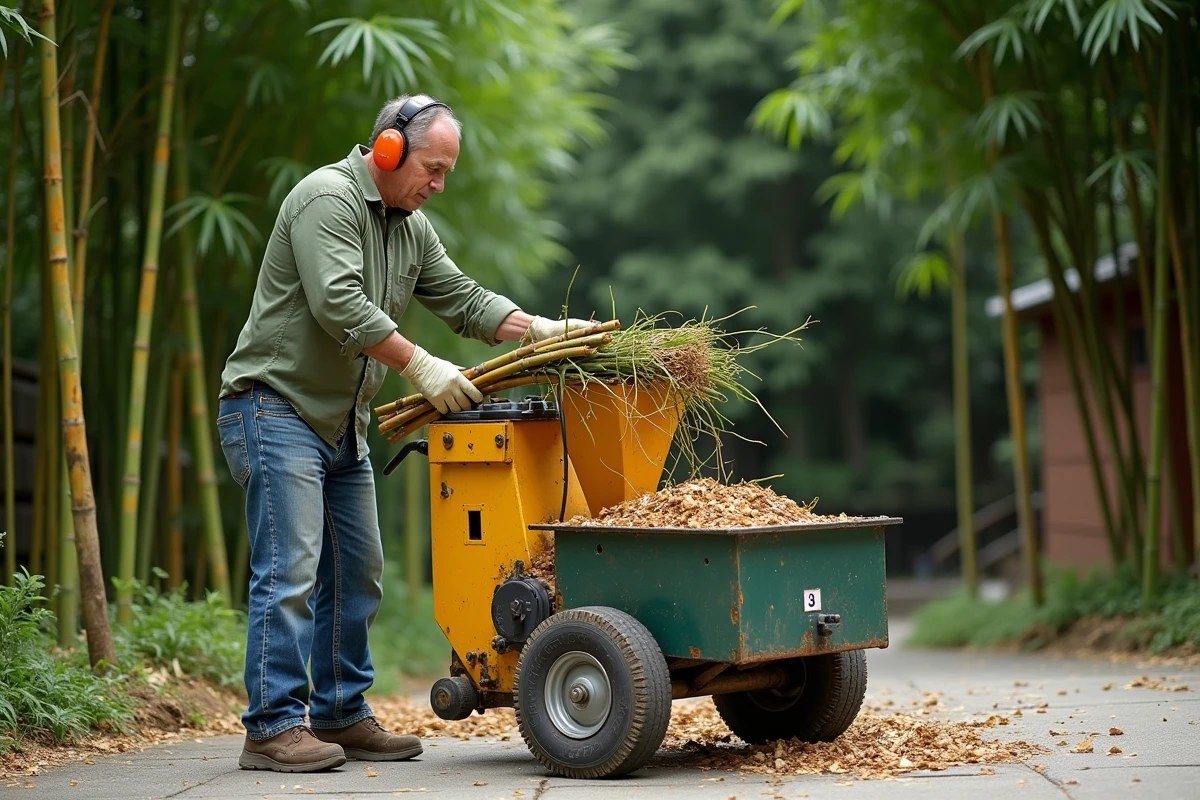
Bamboo presents a problem that most garden shredders are not designed to solve. Its longitudinal fibers, variable hardness depending on the age of the culms, and tendency to jam mechanisms make it a unique material in the garden. Choosing a shredder for bamboo starts with understanding why traditional cutting systems fail with this type of stem.
Bamboo Fibrousness and Constraints on the Cutting System
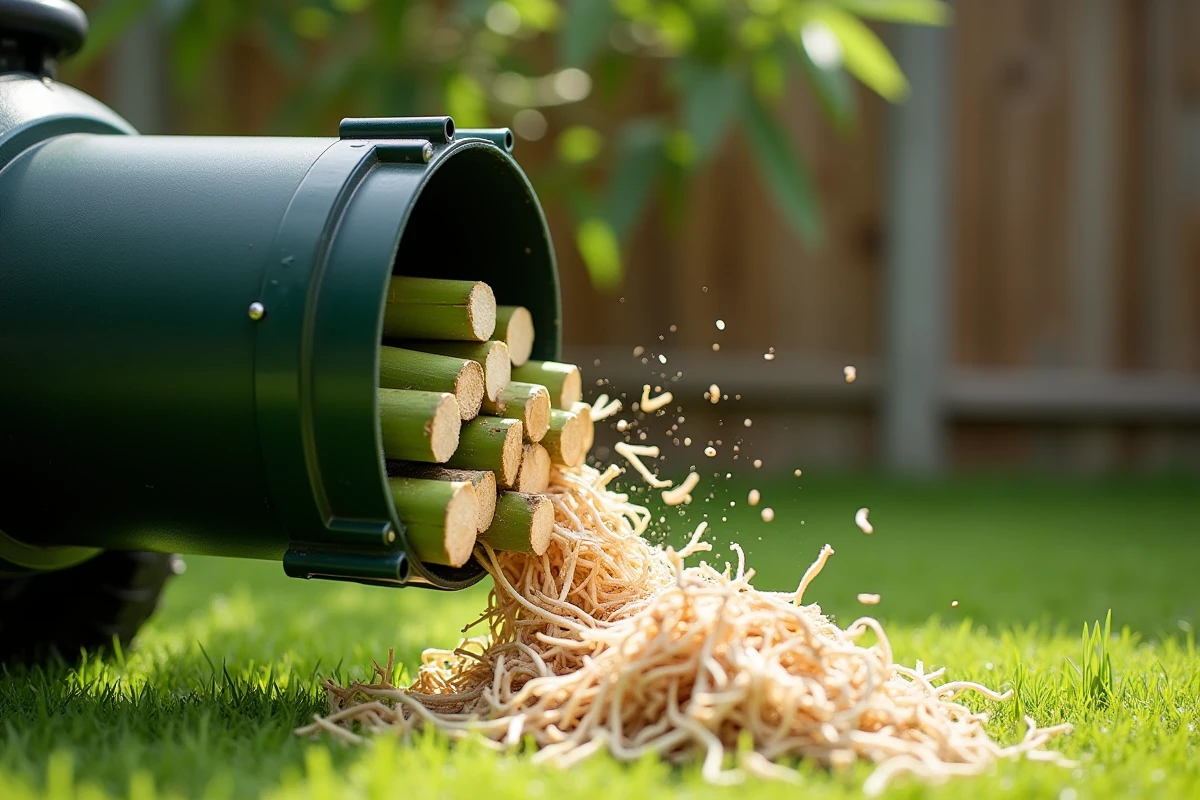
Classic wood fragments into splinters under the action of a blade or rotor. Bamboo, on the other hand, tears into fibrous strips that wrap around moving parts. This longitudinal fibrous structure explains most of the blockages reported by users of domestic shredders.
A young and fresh culm contains a lot of water, making it flexible but sticky: the sap quickly clogs the blades. A dry and mature culm gains hardness and puts more strain on the motor. The behavior of bamboo changes radically depending on whether it is fresh or dry, and the choice of shredder must take this into account.
Blade disc shredders, effective on soft hedges and foliage, quickly reach their limits when faced with bamboo. The rapid rotation of the blades tears the fibers instead of cutting them cleanly, resulting in frequent jams. To identify an effective shredder for bamboo, one must look for mechanisms that crush and cut simultaneously.
Rotor, Turbine, or Blade Shredder: Comparison for Bamboo
Not all shredding systems are equal when it comes to bamboo stems. The table below summarizes performance differences based on the type of mechanism.
| Shredding System | Principle | Behavior on Bamboo | Risk of Jamming |
|---|---|---|---|
| Blade disc | Cutting by rapid rotation | Tears fibers, irregular mulch | High |
| Rotor (cutting cylinder) | Crushing and slow cutting | Better management of long fibers | Moderate |
| Turbine | Combined drive and cutting | Finer mulch, good on dry culms | Low to moderate |
Rotor shredders have a clear advantage with fresh bamboo. Their lower rotation speed reduces fiber wrapping, and the pressure exerted by the cylinder compresses the stem before cutting it. The presence of a reverse function is crucial for freeing stuck fibers.
Turbine shredders, less common, combine suction and cutting. They perform well on dry bamboo, whose rigidity facilitates movement within the mechanism. However, with fresh and flexible bamboo, suction alone is not always sufficient to keep the stems in the cutting position.
Electric or Thermal Motorization: Which Device for Which Use
The type of motor determines the available power and, consequently, the maximum diameter of the accepted culms.
- Electric shredders are suitable for modest-sized gardens with bamboo whose diameter remains limited. A model equipped with a rotor and a sufficiently powerful motor can handle small-caliber culms properly, provided the feed rate is not forced.
- Thermal shredders offer significantly higher torque, suitable for thick culms and large volumes. Their autonomy without electrical connection makes them practical for bamboo groves far from a socket.
- For occasional use (one to three sessions per year), renting a professional thermal shredder may be more relevant than purchasing an undersized domestic device.
The Bosch AXT 2550 TC, often cited in general guides, exemplifies the category of electric turbine shredders. Its advertised intake diameter is suitable for common branches, but large-caliber bamboo culms often exceed the capabilities of standard electric models.
Fresh or Dry Bamboo: Adapting the Shredding Method
Shredding freshly cut bamboo and shredding bamboo that has been dried for several weeks are two distinct operations.
Fresh bamboo, filled with sap, clogs the blades and generates a wet mulch that compacts in the collection bin. It is necessary to clean the mechanism more frequently and limit the amount introduced at each pass. The risk of overheating the motor also increases, especially with electric models.
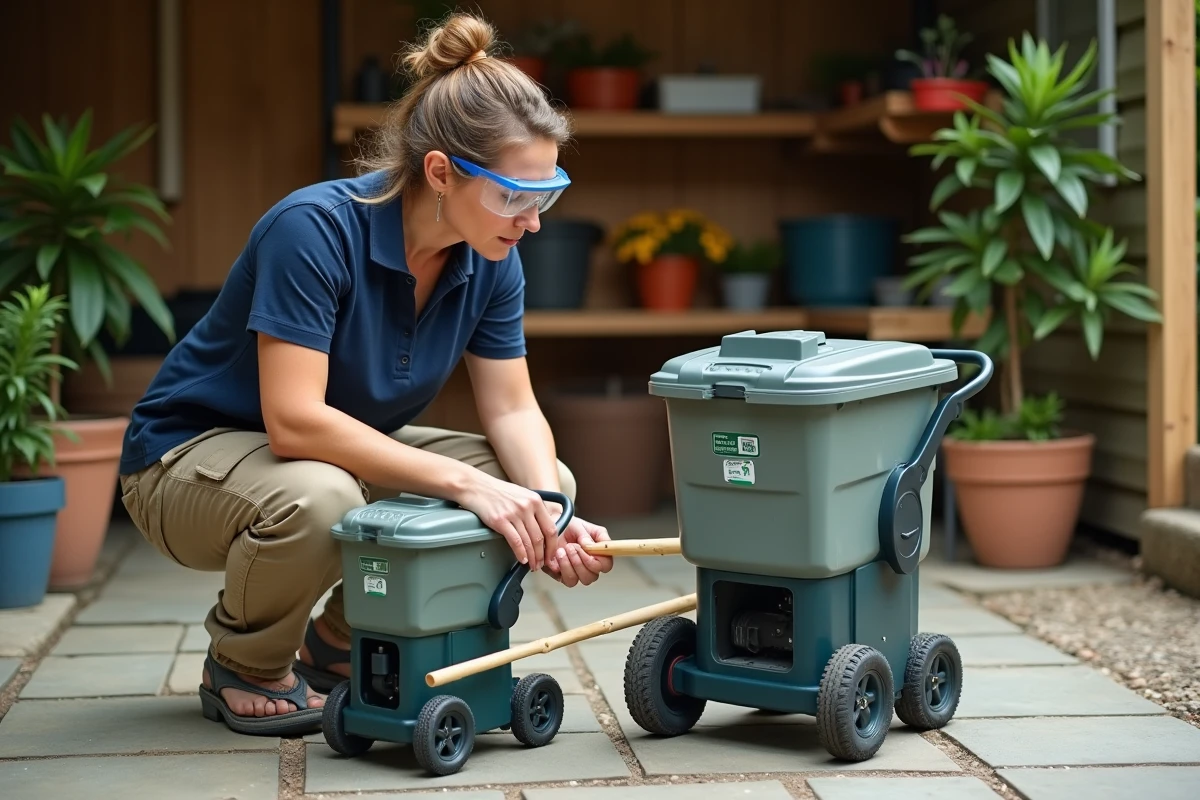
Dry bamboo, on the other hand, fragments more easily. The fibers, dehydrated, break instead of tearing. Allowing the culms to dry for a few weeks before shredding significantly reduces jams. The resulting mulch is also more suitable for mulching or composting, as it decomposes better than wet shavings.
- Fresh bamboo: prefer a rotor shredder with reverse, feed slowly, clean regularly.
- Dry bamboo: a turbine or rotor shredder works well, the feed rate can be more sustained.
- Large diameter bamboo (in all conditions): a professional thermal device remains the most reliable choice.
Utilization of Bamboo Mulch in the Garden
Bamboo mulch is distinguished from classic wood chips by its slower decomposition. This characteristic makes it a durable mulch for flower beds and paths, but a less effective material for rapid composting.
Mixed with nitrogen-rich green waste (grass clippings, peels), bamboo mulch composts properly over several months. Used alone, it forms a mulch layer that limits the growth of weeds and retains soil moisture.
A fine and even mulch requires a shredder suitable for bamboo, not just a general-purpose model. Too coarse or fibrous pieces do not fulfill their mulching role and decompose unevenly.
The choice of shredder ultimately comes down to a question of mechanism. A rotor or turbine, a motor sized for the diameter of the culms, and appropriate management of fresh or dry bamboo make the difference between a device that works and one that jams.