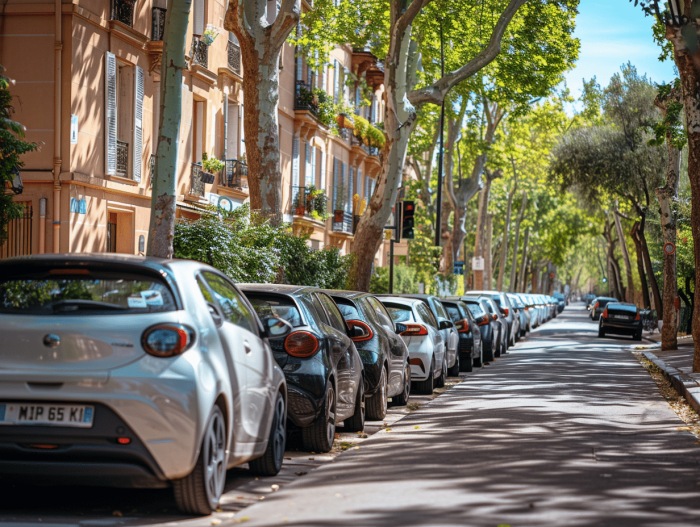
France could soon take a decisive step in promoting eco-friendly vehicles. Considering the adoption of distinctive signs for these cars, authorities aim to make the commitment of drivers to the environment more visible. This initiative could not only encourage more citizens to choose less polluting vehicles but also enhance collective awareness.
The idea is simple: to affix specific badges or stickers on environmentally friendly vehicles. This marking would facilitate the identification of eco-friendly cars, thereby valuing responsible consumer choices. A promising advancement for the energy transition in France.
The stakes of adopting distinctive signs for eco-friendly vehicles
The implementation of distinctive signs for eco-friendly vehicles represents a turning point for the automotive sector. The government is considering introducing visual elements such as a green license plate or a specific badge. This initiative aims to better identify and value electric and plug-in hybrid cars. The reduction of CO2 emissions remains a central objective, with promising figures: the average CO2 emissions of cars registered in 2020 stand at 96.8 g/km compared to 111.5 g/km in 2019.
Multiple advantages
- Increased awareness: Making the ecological commitment of motorists visible can encourage others to take the plunge.
- Economic incentives: Distinctive signs could be coupled with benefits such as toll discounts or privileged access to low emission mobility zones (ZFE-m).
- Promotion of electric mobility: The increased visibility of clean vehicles could boost sales of electric and plug-in hybrid cars, which already accounted for 11% of sales in 2020 compared to 3% in 2019.
A strengthened legislative framework
The mobility orientation law and the climate and resilience law reinforce the importance of ZFE-m, where only the least polluting vehicles can circulate. These laws make it mandatory to establish ZFE-m in areas with high levels of air pollutants and aim for their deployment in urban areas with over 150,000 inhabitants.
Collaboration between the Ministry of Ecological Transition and ADEME to develop charging infrastructure is fundamental. The ADVENIR program encourages the installation of charging stations, essential for supporting the growth of the electric vehicle market. By combining ecological bonuses and conversion bonuses, consumers can benefit from substantial financial support to acquire less polluting vehicles.
The adoption of distinctive signs could play a key role in the current dynamic. By making ecological commitment visible, France could accelerate its transition to more sustainable mobility.

The prospects and impacts on the French automotive market
The adoption of distinctive signs for eco-friendly vehicles could transform the automotive landscape in France. The increased visibility of electric and plug-in hybrid cars can stimulate sales and encourage technological innovation. In 2020, sales of electric cars already represented 11% of the market, a significant increase from 3% the previous year.
Deployment of low emission mobility zones (ZFE-m)
- Grand Paris: One of the first metropolitan areas to establish a ZFE-m.
- Grenoble, Lyon, Rouen: These cities are also following this trend.
- Reims, Toulouse: Gradual deployment of ZFE-m.
The climate and resilience law imposes ZFE-m in urban areas with more than 150,000 inhabitants. This legislation aims to reduce greenhouse gas emissions and improve air quality.
Collaboration and financial support
The Ministry of Ecological Transition and ADEME are collaborating to strengthen charging infrastructure. The ADVENIR program encourages the installation of charging stations, a fundamental element for the development of electric vehicles. The ecological bonus, which can be combined with the conversion bonus (PAC), offers financial incentives to consumers.
Impact on the European market
The European Union imposes additional tariffs on Chinese electric cars, thus hindering their penetration into the market. Despite this, companies like BYD and Chery are establishing factories in Europe. According to Transport and Environment (T&E), the market share of Chinese brands could exceed 20% by 2027.
In France, Citepa regularly publishes reports on greenhouse gas emissions, essential for tracking progress made. The directive 2014/94 and the PPE establish a common framework for deploying charging infrastructure at the European level, thus supporting the transition to more sustainable mobility.