
Kiri is a processed cheese made from fresh pasteurized milk, which immediately raises the question of raw milk, contraindicated for infants. We recommend its introduction from 9 months as part of complementary feeding, a guideline shared by pediatricians and consistent with the chewing and swallowing abilities expected at this age.
Pasteurized milk and melting salts: what Kiri’s composition really implies
Kiri stands out from traditional processed cheeses due to the absence of melting salts and added additives. Its ingredient list is limited to fresh French milk and cream, milk proteins, milk minerals (for calcium), lactic ferments, water, and a pinch of salt.
This short composition is not trivial. The absence of melting salts in Kiri makes it a product better suited than most commercially available processed cheeses.
The point of caution remains the salt content. ANSES recommends limiting sodium intake in young children. A serving of Kiri contains a moderate amount of salt, but this adds to that of other foods consumed throughout the day. We observe that parents who detail precisely the age to give Kiri to baby often forget to account for the cumulative salt from the entire meal.
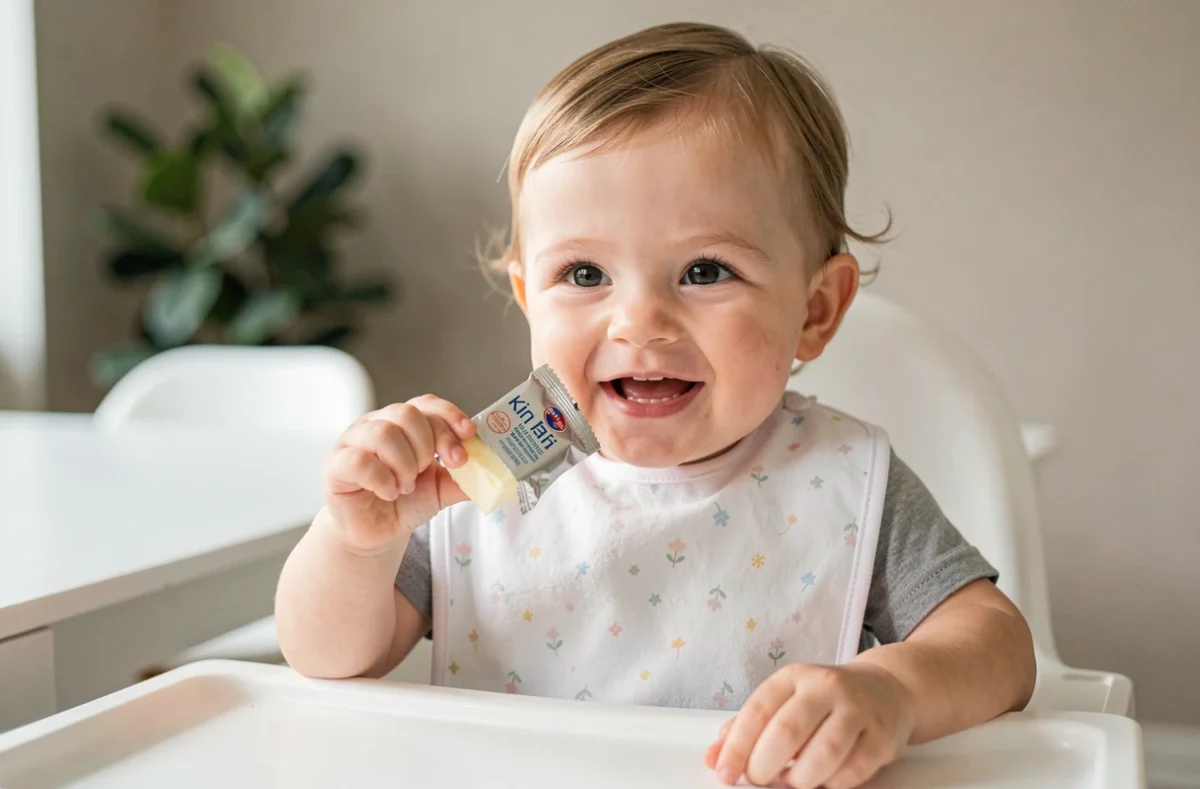
Kiri’s texture and choking risk: adapting the serving method before age
Age alone does not guarantee the safety of introducing cheese. The presentation method is just as important, if not more so. A compact piece of Kiri given as is can stick to an infant’s palate and trigger a gag reflex, sometimes mistaken for the onset of choking.
According to the recommendations from Santé publique France (brochure “Complementary Feeding,” updated 2021), cheese should be offered spread, mashed, or incorporated into a preparation. Kiri is particularly well-suited for these uses due to its melting texture.
Three serving methods adapted by age:
- Before 9 months (if the pediatrician approves an early introduction from 6 months): Kiri mixed into a vegetable puree, melted and smooth, to avoid any distinct pieces.
- From 9 to 12 months: Kiri spread in a thin layer on a puffed rice cake or a stick of bread, allowing the child to practice grasping without the risk of a compact block.
- After 12 months: Kiri offered in small pieces under supervision, with the child sitting upright, never lying down or moving.
The child must be seated in a stable position with head control established. If these motor prerequisites are not met, delaying the introduction by a few weeks remains the right decision, regardless of chronological age.
Kiri and calcium intake: one serving does not replace infant milk
Santé publique France reminds us in its guide “Step by Step, Your Child Eats Like a Grown-Up” (2021 edition): milk remains the main dairy food for infants throughout the first year. Kiri is a supplement, not a replacement.
We recommend not exceeding one serving per day before 12 months. Beyond that, it is important to remain attentive to the cumulative salt intake throughout the day, considering other foods consumed (ham, bread, prepared dishes).

Raw milk cheese or pasteurized: why this distinction changes everything for baby
The confusion between raw milk cheeses and pasteurized milk cheeses persists among many parents. Raw milk cheeses (some camemberts, young comtés, farm reblochons) expose infants to pathogenic bacteria such as Listeria, Salmonella, or E. coli, against which their immune system is not yet equipped.
Kiri, made exclusively from pasteurized milk, eliminates this microbiological risk. This is one of the reasons pediatricians regularly cite it among the first cheeses suitable for complementary feeding.
For parents looking to diversify, pasteurized cooked pressed cheeses (emmental, gruyère) are also a safe option, but their hard texture requires fine grating. Kiri has the advantage of a ready-to-use texture, without additional preparation.
Signs of tolerance and cases where to delay introduction
Cow’s milk protein allergy (CMPA) affects a minority of infants, but it necessitates excluding Kiri as well as any dairy products. Signs to monitor after initial exposure:
- Skin reaction (hives, worsening eczema) within minutes or hours following ingestion.
- Unusual digestive issues: vomiting, diarrhea, persistent refusal to eat.
- Uncontrollable crying or marked agitation after meals, which may indicate gastric discomfort.
In the presence of a family history of CMPA or severe atopic eczema, pediatric advice before the first introduction is necessary. The pediatrician may refer for an oral provocation test in a medical setting if doubts persist.
Each child’s development follows its own pace. A 9-month-old baby who refuses the spreadable texture of Kiri does not need to be forced. Trying again one to two weeks later is usually sufficient, without pressure or guilt.