
A plumbing artisan in Lyon receives three calls per week since he corrected the hours on his Google listing and added project photos. Before that, his listing existed but generated no contacts. Local digital marketing does not start with a grand strategy: it begins with operational details that most businesses overlook.
Local search and generative AI: what will change in 2026
Google AI Overviews and AI Mode now appear on local intent queries, sometimes above the classic local pack. Instead of displaying a list of three listings, the interface may directly mention one or two businesses and summarize their information.
The consequence for a small business or SME is direct: the quality of the Google profile data determines visibility in AI responses. An incomplete or inconsistent profile (incorrect hours, poorly chosen category, no description) has very little chance of being selected by the system.
Google specifies that no technical markup dedicated to AI is required to be eligible. The same logic as classic local SEO applies, but with a stronger emphasis on the consistency and freshness of information. Specialized agencies assist businesses on these topics, as can be seen on https://net-lab.fr/, which offers digital marketing support tailored to local structures.
Another change to integrate: the Questions/Answers section of Google Business Profile has been removed. The API was discontinued on November 3, 2025, according to Raw Digital Group, and the public function has been replaced by responses generated from the profile, reviews, and website. Businesses that relied on this section to inform prospects must now publish these responses on their own site: pricing, service areas, timelines, accessibility.
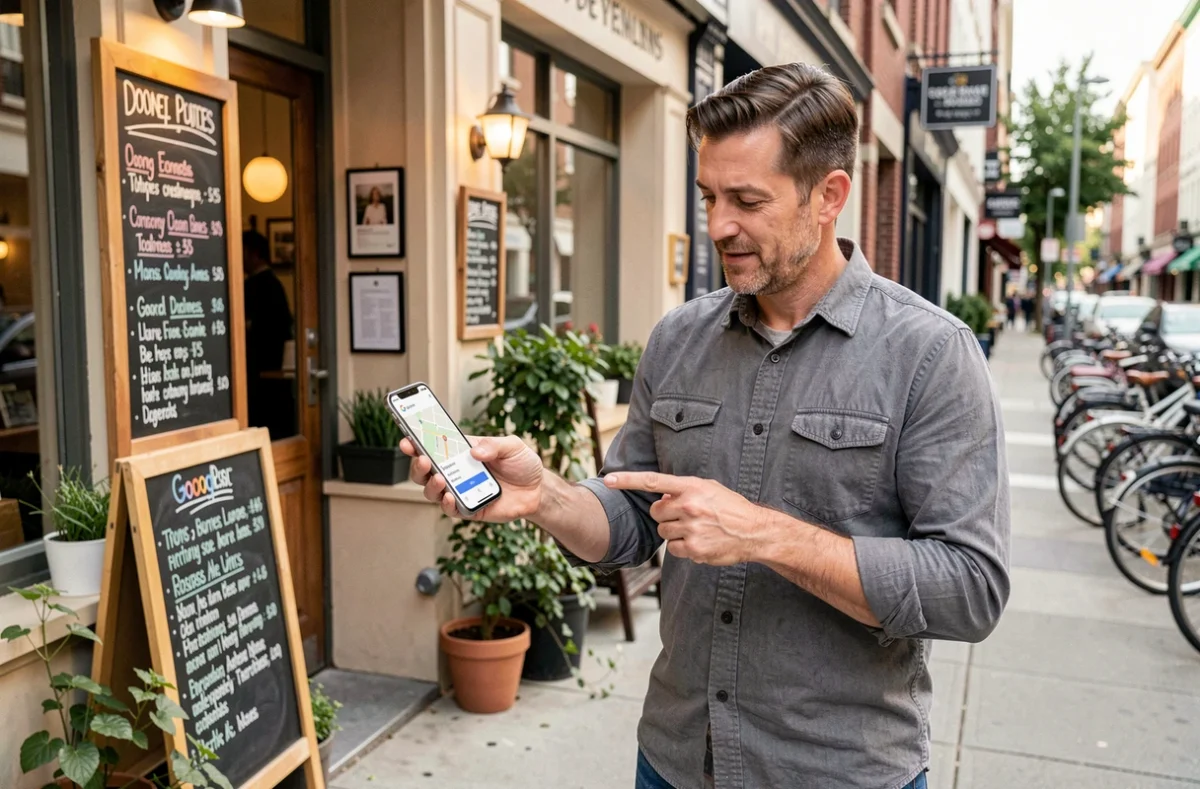
Google Business Profile: field errors that cost customers
The majority of competitors repeat that you need to “complete your Google listing.” We go further: here are the concrete errors that are regularly observed on local business and service provider listings.
Poorly chosen main category
A restaurant that declares itself as “catering service” instead of “restaurant” does not appear in the right queries. The main category determines the searches for which Google positions the listing. It is recommended to check the category used by direct competitors appearing in the local pack.
Absent or generic photos
Listings with recent photos of actual activity generate more clicks than those that display only a logo or a stock image. Posting photos of the team, premises, and projects every month sends a freshness signal to the profile.
Outdated hours
A prospect who travels and finds the door closed will not return. Exceptional hours (holidays, vacations) must be provided in advance. It’s a detail, but an incorrect hour on Google can negate weeks of effort in local SEO.
Customer reviews and French legal obligations: what can no longer be ignored
Online reviews weigh heavily in the purchasing decision. A large majority of French consumers check reviews before finalizing a transaction, and this reflex is even stronger among those under 25.
Since the legislative changes that came into effect in 2024, actors who collect, moderate, or disseminate reviews must specify their control methods. Removing negative reviews without legitimate reason exposes one to sanctions for misleading commercial practices. Feedback varies on this point depending on the sectors, but the basic rule is clear: transparency regarding the collection and moderation methods.
On the ground, the strategy that works is simple:
- Ask for a review from every satisfied customer, preferably within 48 hours of the service, via SMS or QR code on a physical support
- Respond to each published review (both positive and negative) within a week, with a personalized response that mentions the context of the service
- Publish a dedicated testimonials page on your website, clearly indicating the source and date of each review

Local SEO on your website: structuring pages by geographic area
Having a showcase website is not enough if no page targets local queries. An electrician working in three municipalities should create a dedicated page for each, with specific content: types of common interventions in the area, local constraints (old buildings, co-ownership standards), and adapted contact details.
Each local page must answer the questions that the Google listing no longer covers since the removal of the Q&A section. It should include practical information that prospects are looking for: service areas, average timelines, quoting methods.
Some points to check on each local page:
- The name of the city or neighborhood appears in the H1 title, the meta description, and the first paragraph
- The full address and local phone number are present in text (not just in an image)
- An internal link connects each local page to the other service pages on the site
- The content goes beyond simple duplication with a name change: each page provides at least one distinctive element
Local social media: publish useful content rather than frequent content
Three posts per week without engagement are worth less than a monthly post that triggers local shares. On Facebook and Instagram, content that shows actual activity (project photos, behind-the-scenes, before/after) performs better than generic visuals.
For a local business, social media mainly serves as social proof. A prospect who sees recent photos, customer comments, and responses from the manager forms a concrete idea of the company’s seriousness. The volume of posts matters less than the regularity and authenticity of the content shared.
Local digital marketing relies on precise and repeated actions, not on a theoretical plan. Correcting a Google category, responding to a review, posting a project photo: each gesture counts more than a strategy that remains on paper.