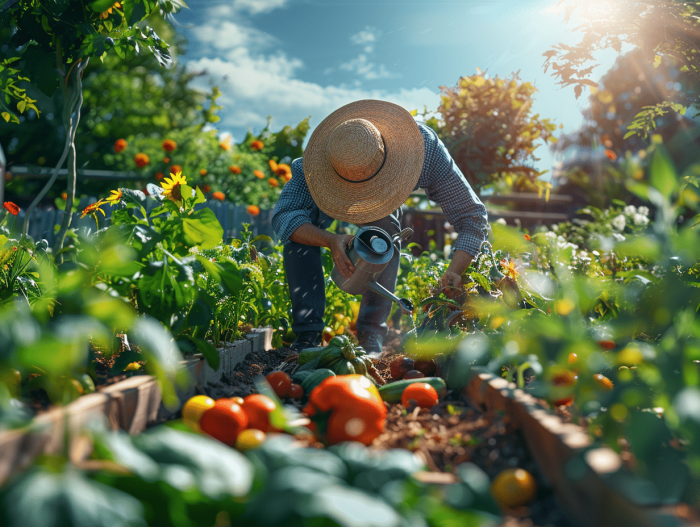
Growing your own summer vegetables is an exciting adventure that offers not only fresh produce but also a true sense of personal satisfaction. With a few simple tips, even novice gardeners can transform their garden into a productive vegetable patch.
It’s essential to choose varieties suited to your climate, optimize space, and care for the soil to ensure a bountiful harvest. Proper watering, effective pest management, and regular monitoring allow you to enjoy juicy tomatoes, crunchy zucchinis, and colorful peppers throughout the beautiful season.
Preparing the Soil and Choosing the Right Varieties
The essence of a productive vegetable garden lies in careful soil preparation. Adopt permaculture practices to enrich the soil naturally and sustainably. Well-prepared soil is fundamental for the growth of perennials like Daubenton cabbage, which is very resilient and prolific even without watering.
Choosing the Varieties
Opt for vegetables that are suited to your local climate. For regions with a mild climate, prioritize species such as the ‘Petit violet’ artichoke, which requires nothing once planted. Other varieties like perpetual leeks and rocambole onions are also recommended for their ability to multiply and provide abundant harvests.
- ‘Petit violet’ Artichoke: requires nothing once planted.
- Perpetual Leek: multiplies from the bulbs that develop at its base.
- Rocambole Onion: develops bulbils at the ends of their stems.
Essential Summer Vegetables
Summer vegetables such as cherry tomatoes, zucchinis, and pole beans ‘Fortex’ or ‘Phénomène’ are ideal choices for a summer garden. Cherry tomatoes can even reappear the following year if they fall carelessly to the ground. Also consider Cucurbits like squashes and melons, which add a sweet touch to your garden.
| Vegetable | Variety | Characteristics |
|---|---|---|
| Cherry Tomatoes | — | Reappears the following year |
| Pole Beans | Fortex, Phénomène | Productive and easy to grow |
| Zucchinis | — | Productive and easy to grow |
For flavor enthusiasts, aromatic plants like lavender and rosemary thrive in poor soil and require little watering. Their presence in the garden is not only aesthetic but also beneficial for biodiversity.
Cultivation Techniques and Summer Maintenance
Maintaining a garden with minimal upkeep involves using appropriate techniques. Mulching is an effective method for conserving water and facilitating weeding. By covering the soil with organic mulch, you reduce evaporation and limit weed growth. Use materials like straw, fallen leaves, or grass clippings for optimal results.
Watering and Water Management
Summer can be a period of water stress for your plants. Prioritize deep and spaced watering to encourage roots to grow deep into the soil. Install a drip irrigation system for precise and water-efficient irrigation. Plants like onions and shallots do not require frequent watering, while zucchinis and cherry tomatoes need regular watering.
Pruning and Disease Management
Pruning tomato plants helps aerate the foliage and prevent fungal diseases. Remove suckers and leaves touching the ground. For aromatic plants like rosemary and lavender, lightly prune after flowering to encourage new growth. Monitor closely for signs of disease and intervene quickly with natural treatments, such as nettle manure.
- Mulching: conserves water and facilitates weeding.
- Watering: prefer drip irrigation for water-efficient watering.
- Pruning: essential for tomatoes and aromatics.
By adopting these techniques, you ensure your vegetable garden’s optimal health and generous harvests throughout the summer.