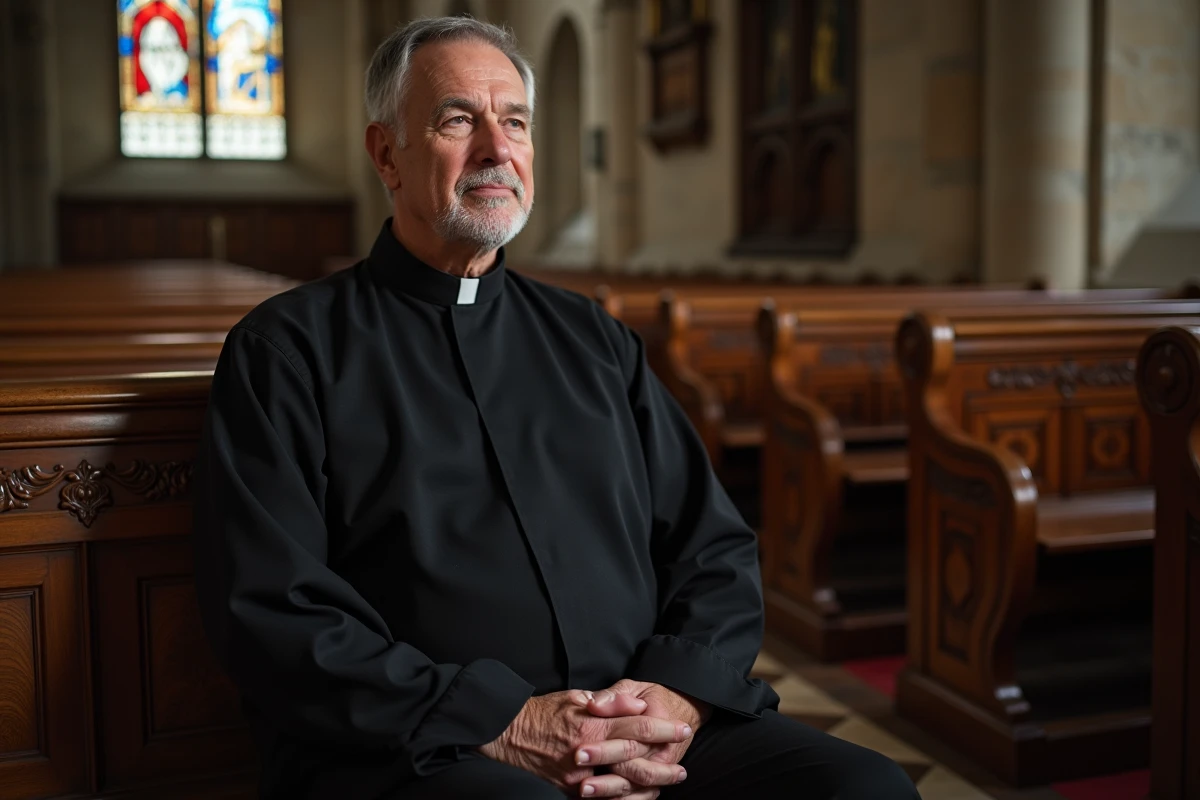
The discipline of priestly celibacy holds strong in the Latin Catholic Church, while in the Eastern Churches, the ordination of married men no longer shocks many. The foundational texts do not explicitly prohibit emotional attachment to a priest. Yet, breaking the vows of chastity remains a serious offense. Between admiration, affection, and forbidden passion, the boundary becomes blurred. Doctrine and human experience clash, without providing ready-made answers. Each of these individual stories shakes both Christian morality and the way the Church evolves in response to the question.
Love and the Priesthood: Understanding the Spiritual and Human Stakes
The priest is not a believer like any other. His place within the community of believers puts him on the front line: he accompanies, he listens, he becomes a direct witness to that mysterious bond between man and God during the sacrament of reconciliation. But between deep recognition and the impulse of the heart, the limit can become unclear. Is loving a priest a sin? This question arises insistently where spiritual life intersects with the reality of feelings.
In Catholic tradition, there is a clear distinction between a love that elevates, that brings one closer to God, and a passion that crosses the lines of priesthood. Dedicated to serving the body of Christ, the priest has committed to living in chastity. However, loneliness, or sometimes fragile brotherhood, can create tensions. Let us not forget that confession itself, that moment when everyone reveals themselves, reminds us that the priest is not an end in himself, but a mediator.
Here are the guidelines the Church sets in this complex context:
- The secret of the confessional allows for no exceptions, even if feelings arise during exchanges.
- The community of believers does not judge those who go through inner turmoil but welcomes the penitent seeking peace.
If Christian tradition does not condemn affection, it invites one to question the ability to love without hindering the vocation of the other. The priestly ministry, often demanding, exposes the priest to sincere attachments that, if intensified, require discernment. Remaining faithful to the call of Jesus Christ, reflecting on the role of desire in the life of the Catholic Church, is the whole issue.
Loving a Priest: Where Are the Boundaries of Sin According to Christian Tradition?
In Christian tradition, sin is not merely a matter of feelings or attachment. The Catechism of the Catholic Church distinguishes between emotion, which is human, and action, which engages the will and transgresses the law of God. Feeling love or admiration for a priest does not automatically equate to a fault, as long as the act, in fact or intention, does not occur.
The Code of Canon Law only prescribes sanctions for certain grave sins: desecration, violence, abuse. An attraction or a feeling, even a strong one, is not enough to cross the red line. It is the breach of the vow of chastity, scandal, or harm to the priestly ministry that shifts the situation.
A central point remains: the examination of conscience. It helps to discern what falls under emotion, desire, or a thoughtful choice. Here’s how the Church invites one to approach this reflection:
- The real intention, free will, and the gravity of the act weigh in the balance to qualify the sin.
- The act of satisfaction, the process of repair, plays a key role in the absolution during the sacrament of penance.
When Jesus Christ confronts the adulterous woman, he does not condemn the person but questions the act. Romantic feelings, when they involve a priest, struggle within this ongoing tension between emotion, fidelity to the mission, and the call to mercy.

Personal Reflections and Paths to Live One’s Feelings in Faith
Loving a priest is not an automatic condemnation. In spiritual life, no attachment is trivial, and the heart does not impose easy barriers. The Catholic Church acknowledges that emotions sometimes invite us to question, to seek the meaning of faith. In the face of emerging romantic feelings, tradition suggests distinguishing between fleeting emotion and the intention to act on that feeling.
The examination of conscience then becomes a valuable tool. It allows one to distinguish between desire, idealization, and true love, which is compatible with the priest’s vocation. The Church recommends confiding one’s doubts and emotions to a trusted interlocutor, whether during the sacrament of reconciliation or with a spiritual advisor, without fear of being judged.
Here are some suggestions that may help navigate this questioning:
- Take time for prayer and inner dialogue to explore the source of this attachment.
- Engage in confession, where confidentiality is guaranteed, to share what one carries and find an attentive ear.
- Participate in Mass and meditate on the Eucharist, in order to place one’s feelings within the dynamics of giving and forgiveness.
Satisfaction, this act of repair towards the other or the community, is part of the path of conversion. Living one’s feelings in faith means recognizing both their power, their ambivalence, and their ability to question the place of the body, desire, renunciation, and the call to holiness. The Church does not reject emotion: it offers a demanding journey, where authentic speech, listening, and fidelity to oneself pave the way. On this path, no one advances without flaws, but everyone can choose to walk, free and clear-sighted.