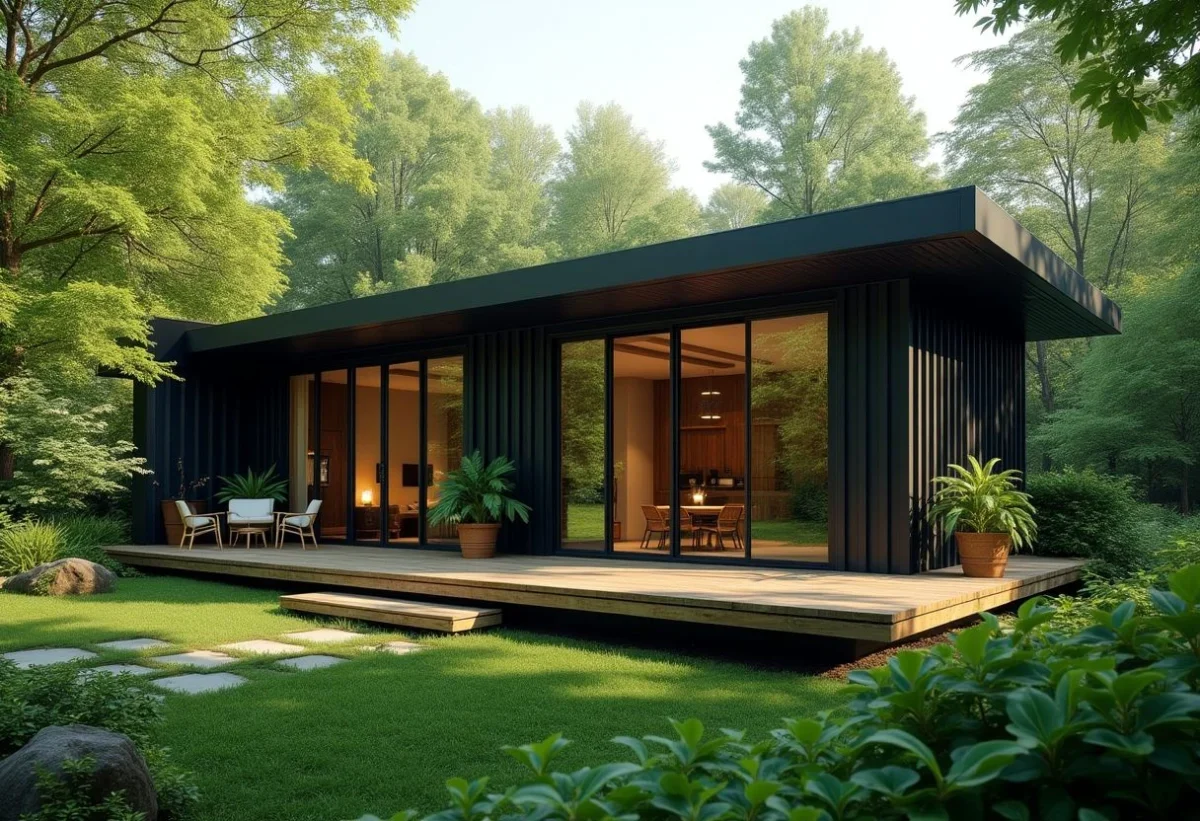
Shipping containers have become much more than just simple metal boxes used for transporting goods. Today, they embody an architectural revolution, offering a multitude of creative and practical possibilities. Buying a container no longer just means acquiring a structure to store goods. It means investing in innovative, sustainable, and economical construction projects.
Why buy a container?
Asking why to buy a container today is akin to questioning current architectural and economic trends. These robust and modular metal boxes have become sought-after solutions for various projects, from housing to commercial spaces.
First, their durability is undeniable. Designed to withstand harsh maritime conditions, containers offer remarkable longevity. Their corten steel structure provides resistance to weather and impacts, ideal for varied conditions.
Moreover, their adaptability is a considerable asset. Whether you are considering creating a home, an office, or even a café, containers can be customized according to your specific needs, allowing for numerous personalization options.
- Ecology and sustainability: Recycling and reusing these structures helps reduce our carbon footprint.
- Economy: Converting a container into a livable space often costs less than traditional construction.
- Flexibility: They can be moved and rearranged as needed.
The key steps to buying
Acquiring a container requires careful preparation to avoid potential pitfalls. Here’s how to proceed effectively.
First and foremost, it is essential to clearly define your project. Whether it’s to buy a container for conversion into a living space or a workspace, your needs will determine the features to look for.
- Identification of specific needs: Determine the size, condition (new or used), and necessary modifications.
- Choosing a supplier: Research reputable sellers and compare the options available.
- Inspection and purchase: Before finalizing the purchase, conduct a detailed inspection to verify the overall condition of the container.
Innovative applications of containers
The use of containers is not limited to residential spaces. Their versatility has given rise to innovative ideas, pushing the boundaries of contemporary architecture.
Commercial containers are transforming into pop-up shops, thus meeting the needs of businesses looking to test new markets without excessive investments. In the food sector, containers house food trucks or street food stalls, adding an urban and modern touch to the culinary experience.
In urban areas, social housing projects incorporating containers are emerging, offering quick and affordable solutions in response to housing shortages.
Cultural and artistic spaces also find their place in these amazing structures, providing artists with modular workshops at a lower cost.
The challenges to consider
The acquisition and use of containers are not without challenges. Here are some aspects to consider before embarking on this type of project.
First, compliance with local regulations is imperative. Legislation varies considerably from one region to another, influencing the necessary permits to install a container.
Another crucial point is insulation. Containers, designed for transport at ambient temperature, require enhancements to provide adequate thermal comfort.
Finally, the interior layout must be carefully planned to maximize space and ensure optimal functionality.